
face biometric ai
14 articles
What is an Access Control System? Complete Guide for Beginners
Explore access control systems in India. Compare biometric and card access, features, benefits, and costs in 2026.
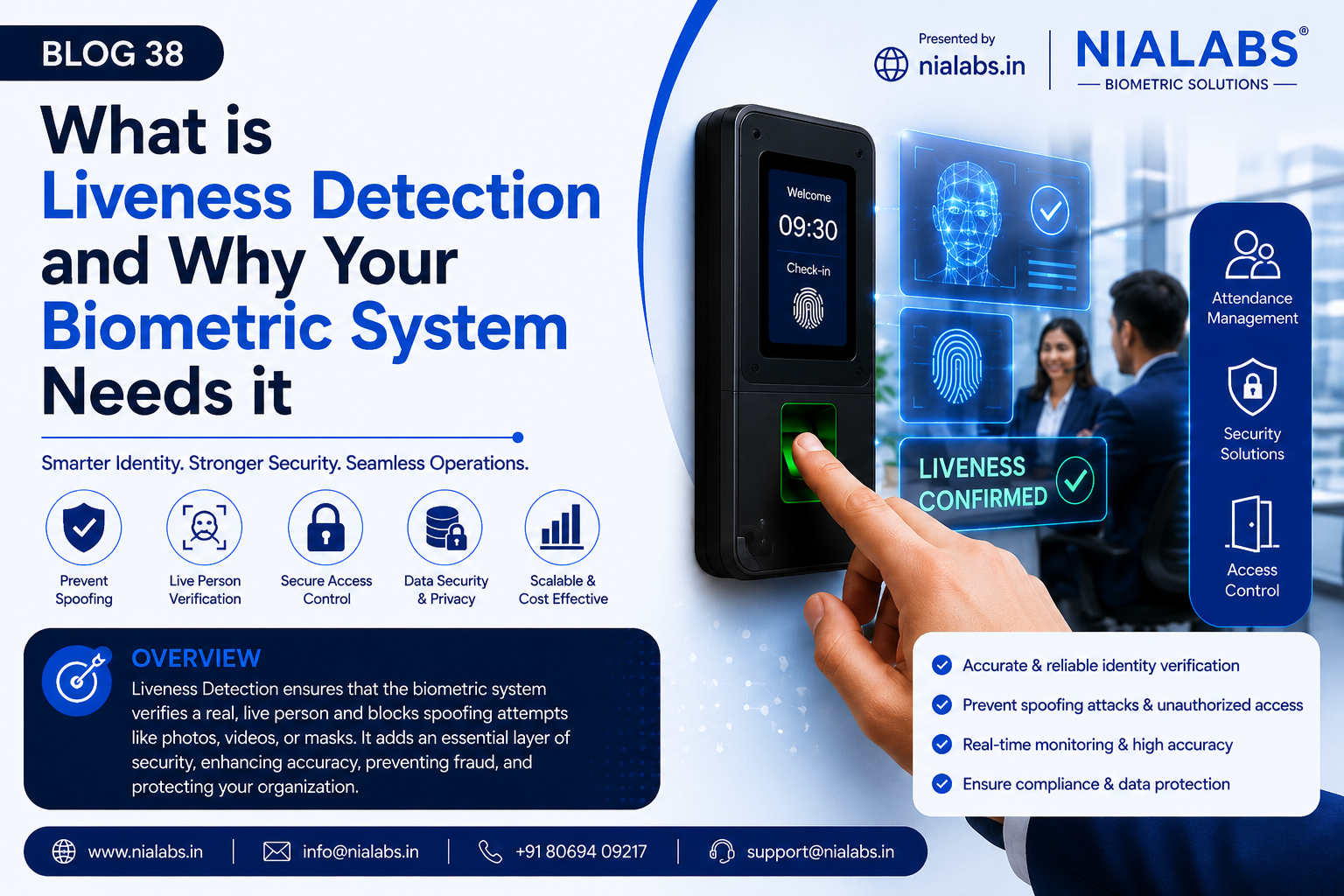
What is Liveness Detection and Why Your Biometric System Needs it
Liveness Detection is a security mechanism used to verify that a biometric image (of a face, fingerprint, or iris) is of a live human being and not a static image, such as a photograph, video, or plastic imitation. It is essential that all organizations, now implementing a biometric system, include liveness detection as a key security component.
DPDP Act 2023 and Biometric Attendance: A Complete School Guide
Learn how schools can implement biometric attendance systems while complying with the DPDP Act 2023. Explore data privacy, consent, security, and best practices with Nialabs Biometric System.
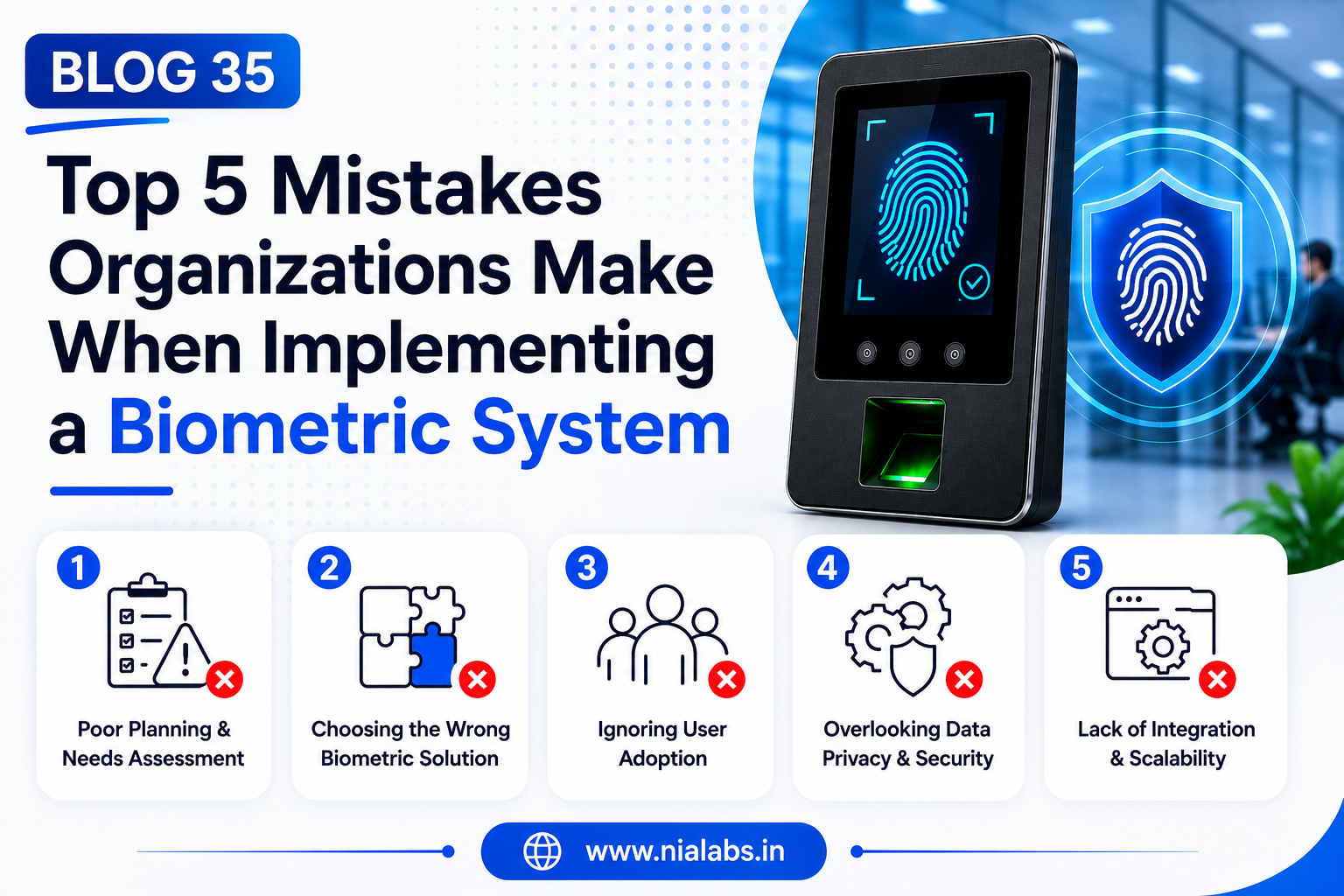
Top 5 Mistakes Organizations Make When Implementing a Biometric System
the top 5 mistakes organizations make when implementing biometric systems, including poor planning, security risks, and integration challenges. Learn how to choose the right biometric solution for your business.
Biometric Attendance for Multi-Location Businesses
Manage employee attendance across multiple branches with Nialabs biometric system. Get real-time tracking, payroll integration, GPS and cloud reports.
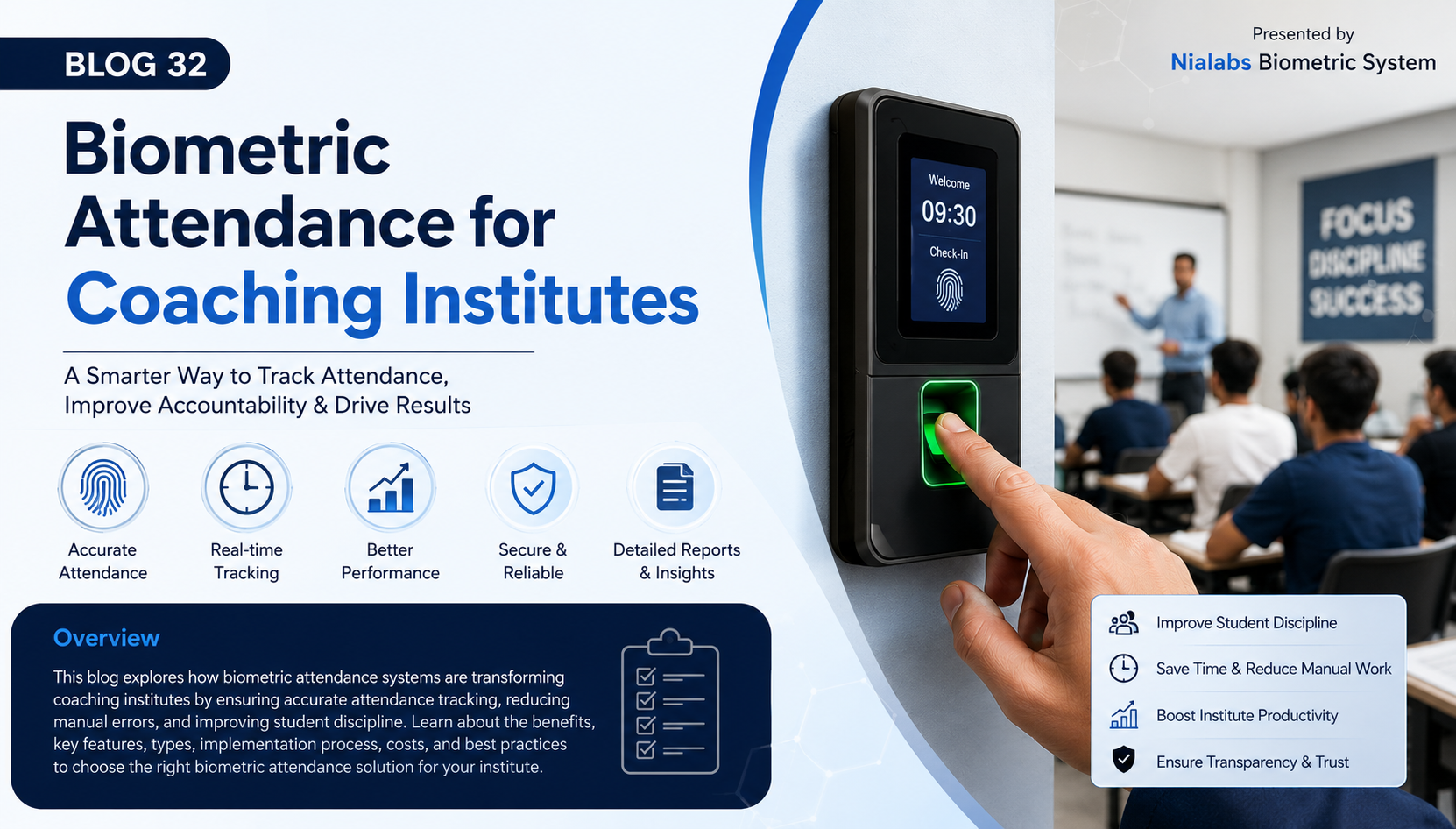
Biometric Attendance for Coaching Institutes
Discover how biometric attendance systems help coaching institutes improve attendance accuracy, save time, prevent proxy attendance, and enhance student discipline with smart automation.
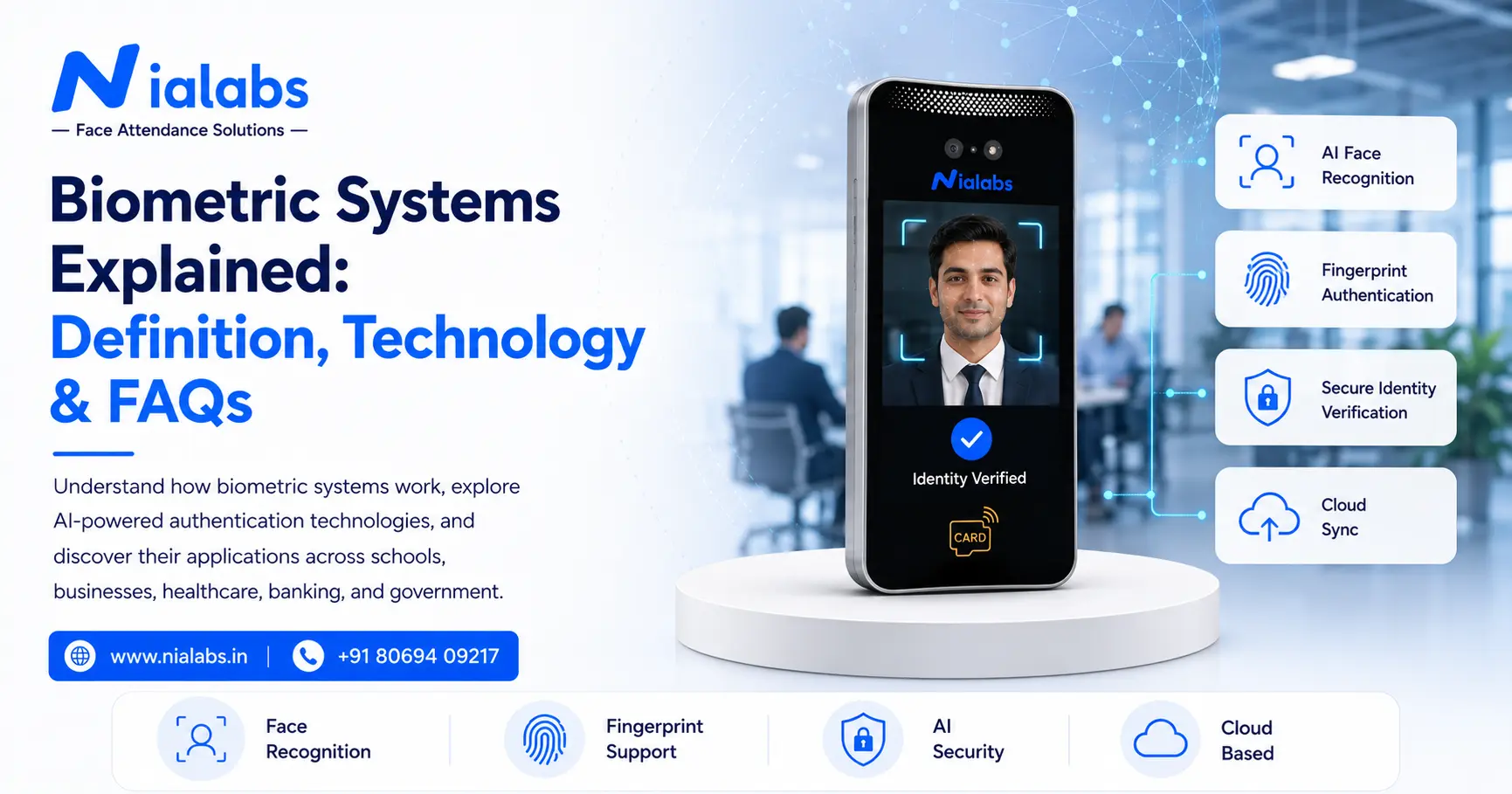
Biometric Systems Explained: Definition, Technology, and FAQs
Discover how biometric systems work; explore face recognition, fingerprint authentication, AI-powered identification, performance metrics, applications, benefits, challenges, and FAQs.
Face Recognition Attendance & Access Control Systems: How They Work, Benefits, and Applications
AI-powered face recognition attendance systems improve workplace security, enable contactless attendance, prevent proxy entries, and streamline access control across industries.
Biometric Attendance System vs Traditional Attendance
Compare biometric attendance systems with traditional attendance methods. Learn the key differences, benefits, and why businesses choose Nialabs.
Top 10 Face Recognition Devices in India (2026 Edition)
Discover the top 10 face recognition devices in India for 2026. Compare AI attendance systems, features, pricing, and security to choose the best solution.
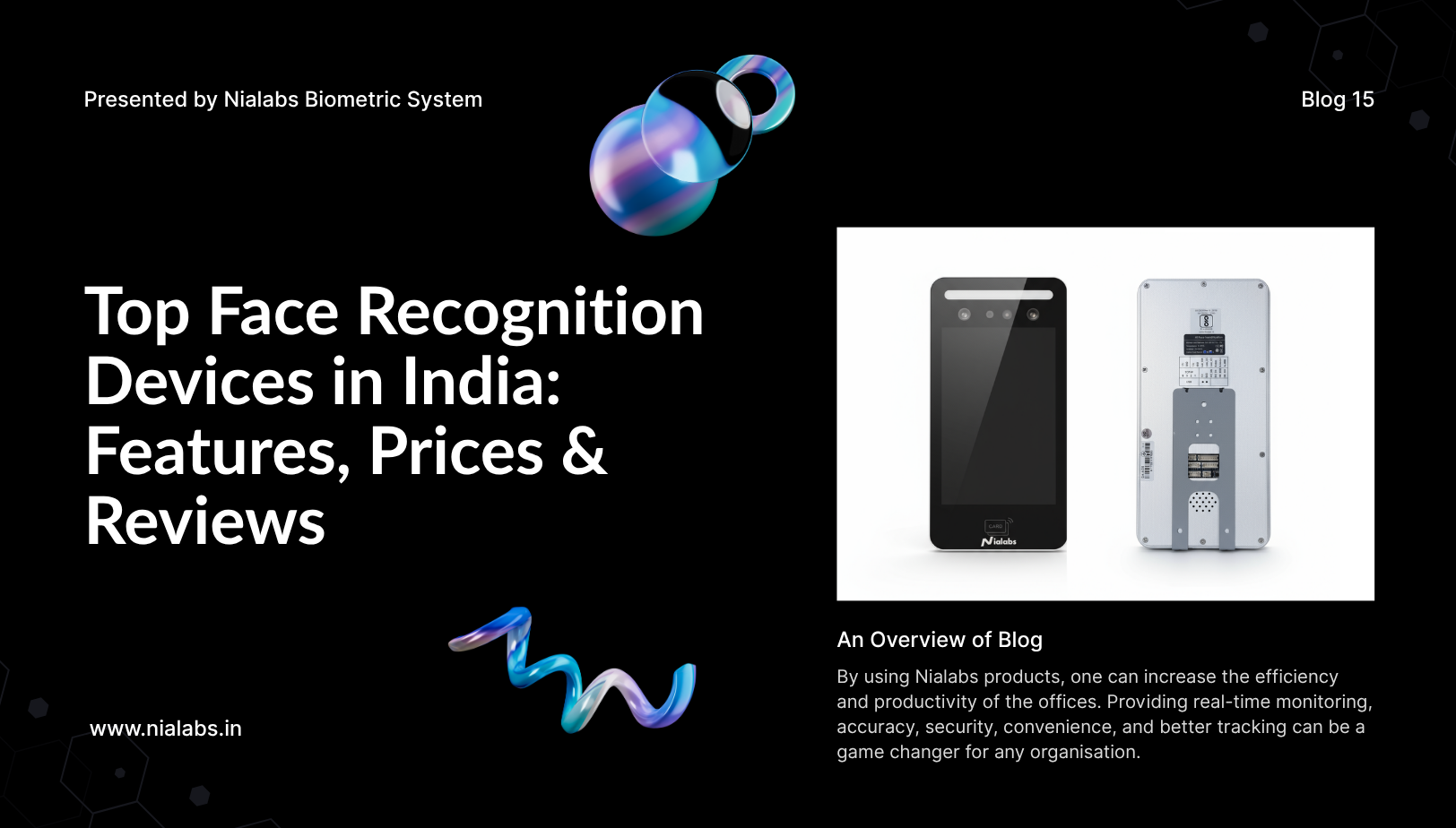
Top Face Recognition Devices in India – Features, Prices & Reviews
Now, with face recognition technology, attendance and access control are simple and intelligent processes. Contactless attendance systems have replaced conventional systems in schools, offices, factories, and hospitals. They are fast, precise, and clean, thus suitable for contemporary work environments.
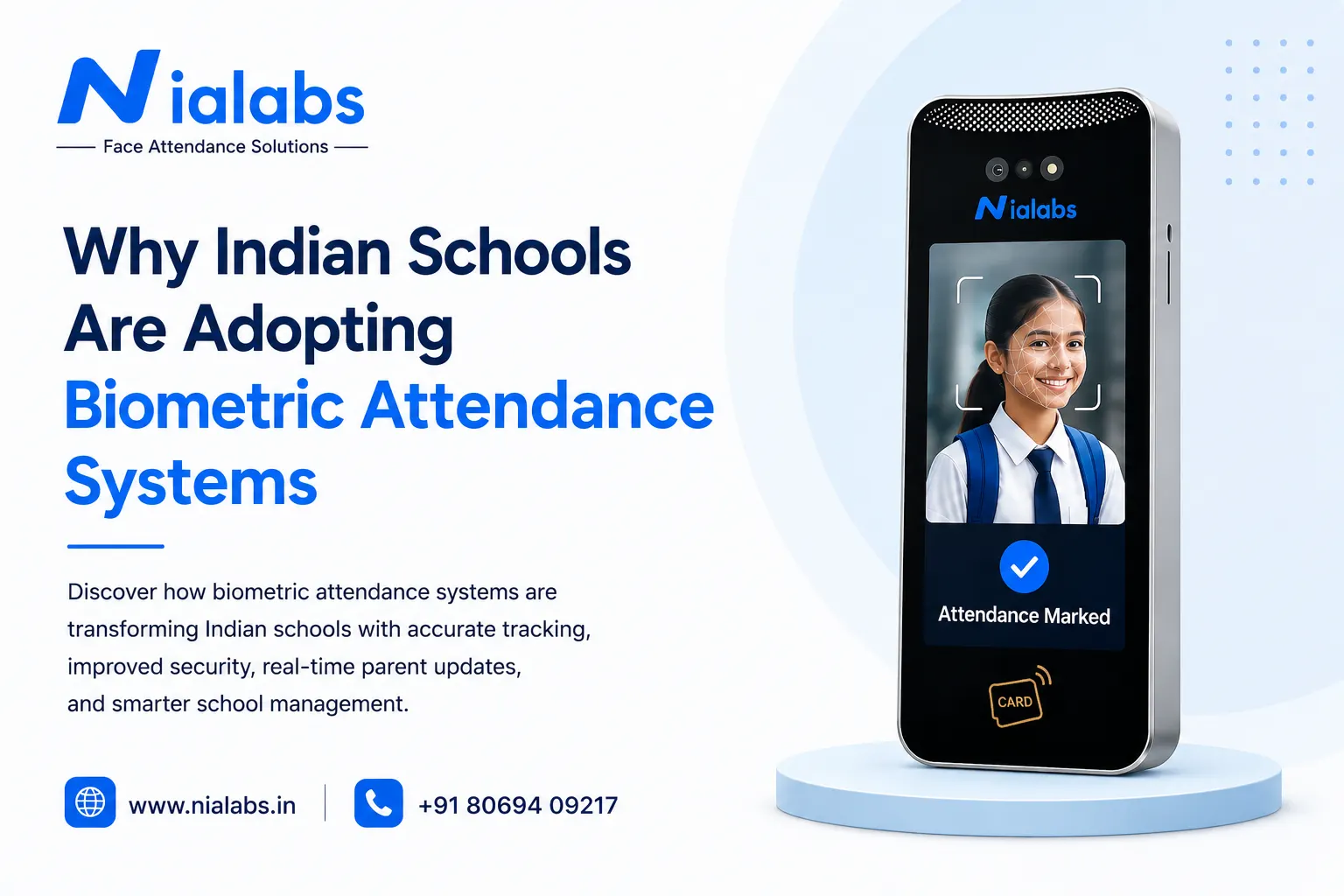
Why Indian Schools Are Adopting Biometric Attendance Systems in 2026
Discover why Indian schools are adopting biometric attendance systems for accurate tracking, improved security, parent updates and smarter school management.